11 Ways Nash County History Surfaces in Today's Listings

In this post
- 1. The falls that named the city
- 2. Mill village houses, built small and close together
- 3. The county line runs under the railroad tracks
- 4. The railroad built its own neighborhood
- 5. The courthouse is in Nashville, ten miles west
- 6. The school district line moved in 2024
- 7. City power, county line, one bill that does not change
- 8. The station is still a working station
- 9. Downtown’s revival is real, and unfinished
- 10. What the mill campus is, and what it isn’t
- 11. Farm plats on ground that still grows crops
- The through line
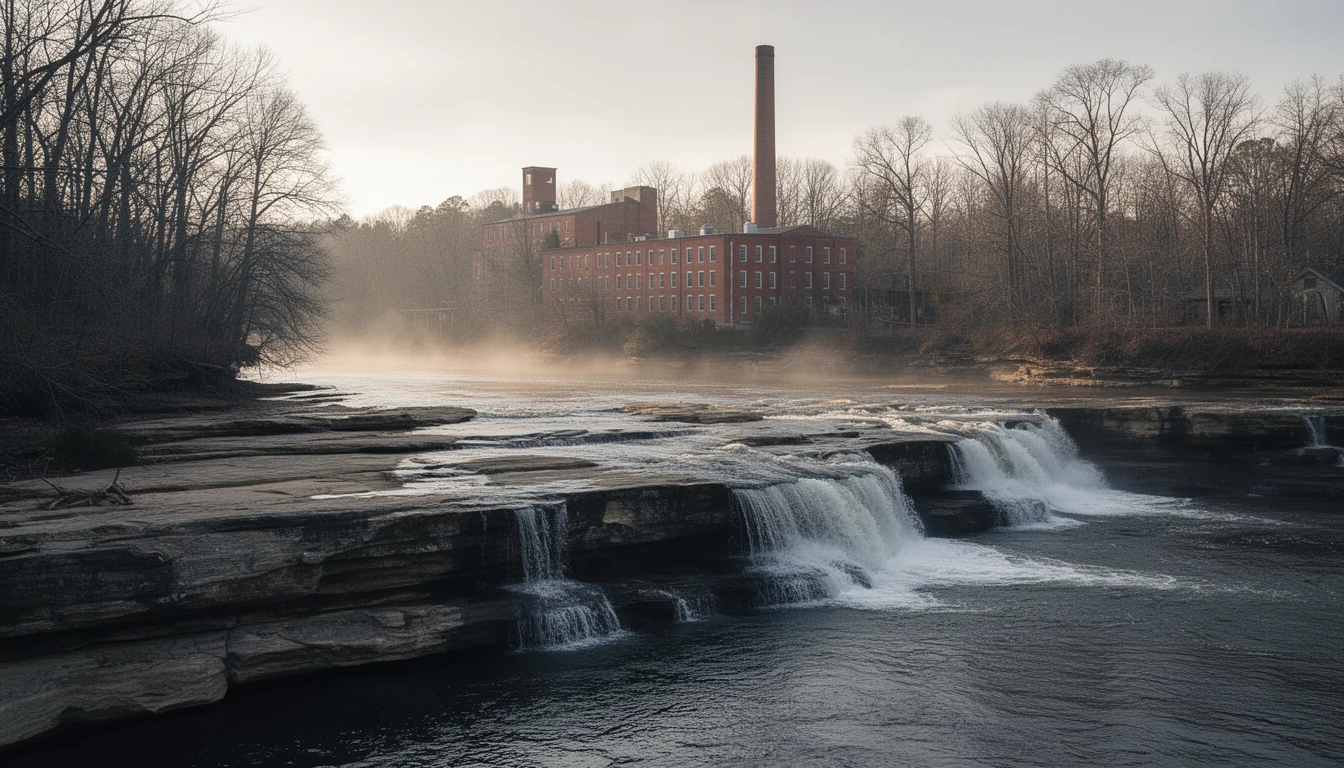
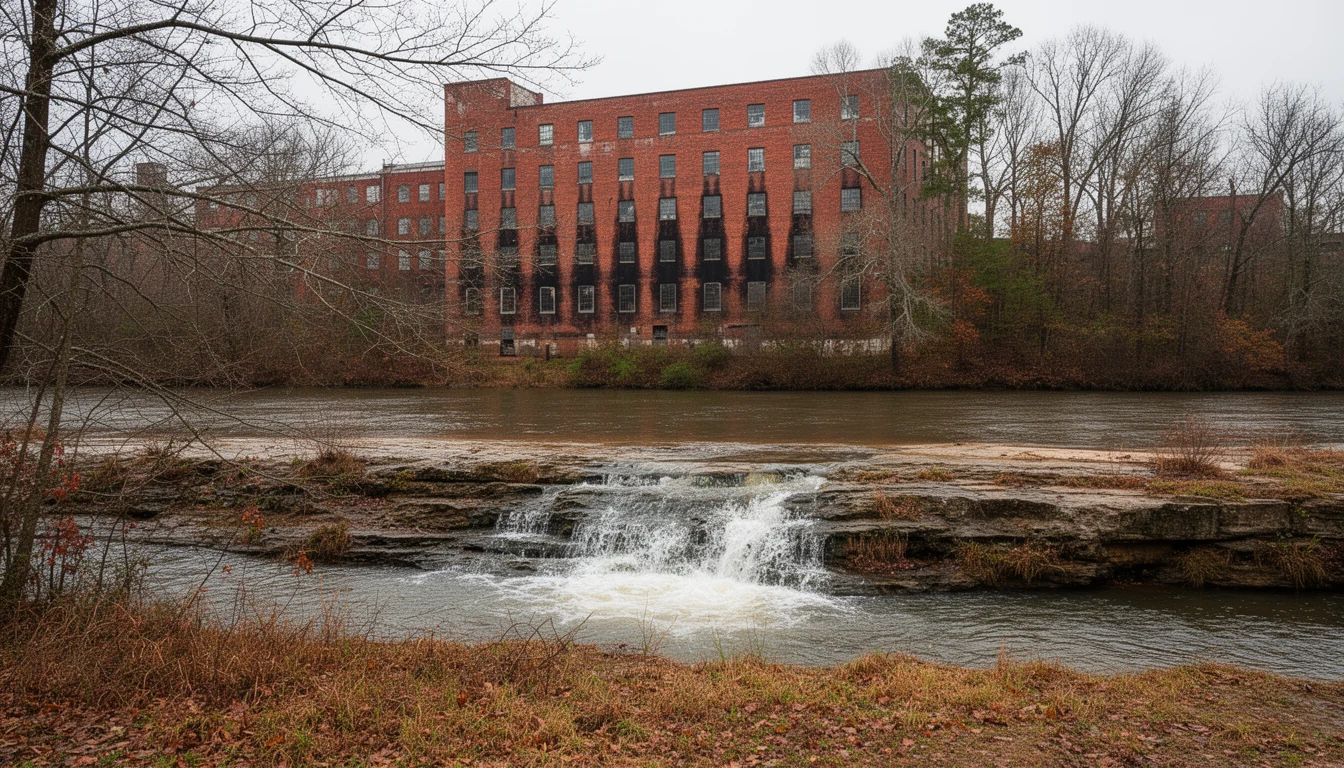
Stand on Falls Road on a wet Tuesday morning and the river does most of the talking. The Tar River slides over the rock ledges that gave this city its name, and the smell coming off the water is mud, old brick, and a little creosote from the pilings upstream. Behind you, a row of houses the mill built for its workers still stands shoulder to shoulder, porches close enough to the sidewalk that you could hand a neighbor a cup of coffee without leaving the steps.
That is the thing about buying in Nash County. The history here never got fenced off into a museum district. It is in the housing stock, the tax bill, the school assignment, and the plat map. Here are eleven places where the past shows up in the listings you will actually tour, and what to check when you see each one.
1. The falls that named the city
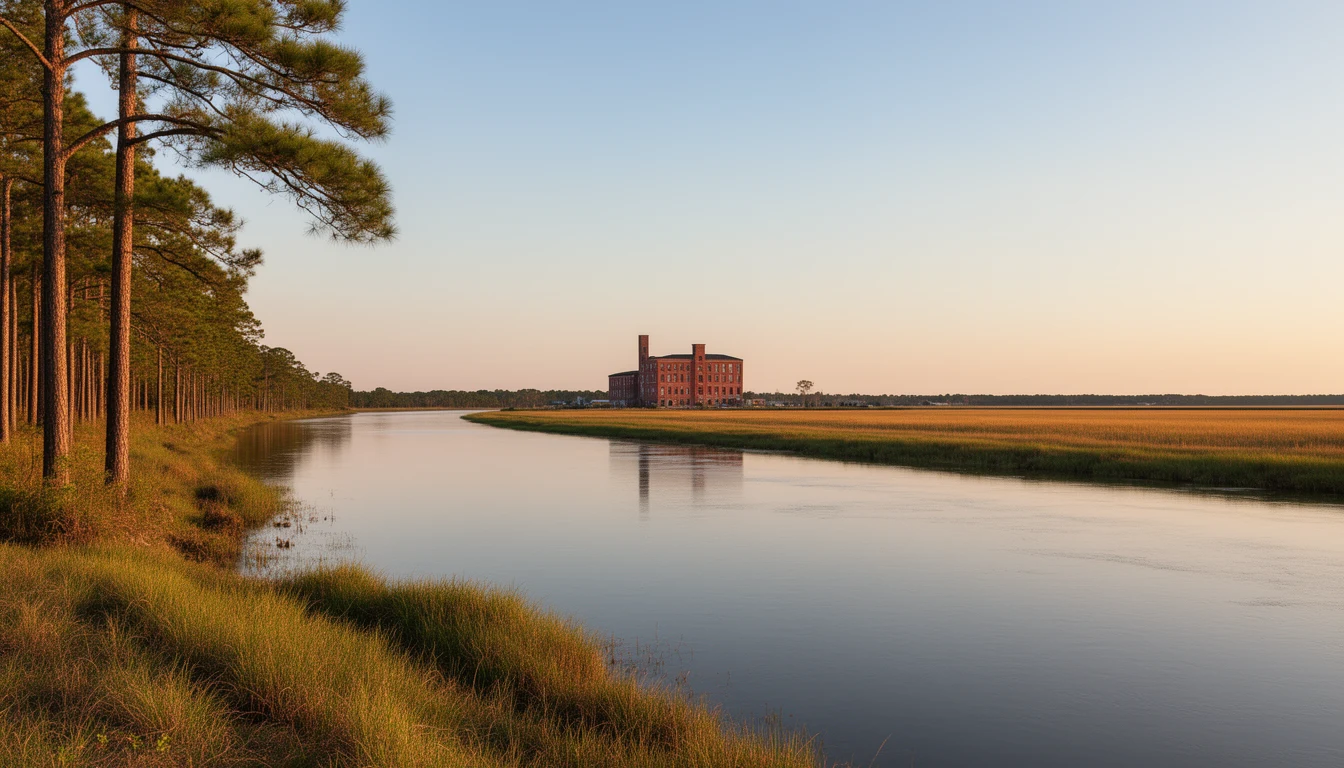
The Tar River drops over a rock ledge at the western edge of Rocky Mount, and that ledge is the reason the city exists: “rocky mount” is a description, not a metaphor. A cotton mill went up on the bank in 1818, and by the mill’s own account it was the second oldest cotton mill in North Carolina.
In a listing, Falls Road addresses sit closest to the water, and river-adjacent parcels can carry flood insurance requirements that change the monthly math. Ask about flood zone status on anything near the Tar River before you fall for the view.
2. Mill village houses, built small and close together
Walk the blocks around the mill campus and you will see the housing the mill put up for its workers: small frame bungalows, deep porches, narrow lots, most of them from the early 1900s. Some were renovated well, some were renovated cheaply in the 1990s, and some have not been touched in decades.
On the same street, condition varies more than location does. That spread, not the address, is what separates a good buy from a project. Ask specifically about wiring and panel condition, plumbing material, and any work that was done without a permit.
3. The county line runs under the railroad tracks
Stand on the platform at the Rocky Mount train station and look down. The tracks are the boundary between Nash and Edgecombe counties. The legislature moved that line from the Tar River to the rails in 1871, and it has not moved since.
Two houses a five-minute walk apart can sit in different counties. On the 2026-27 rates, the county portion of the bill is $0.63 per $100 on the Nash side and $0.89 on the Edgecombe side, with the same city rate of $0.69 (adopted for fiscal year 2027) stacked on top, for $1.32 and $1.58 combined. That is roughly 26 cents per $100 apart, or about $260 a year per $100,000 of assessed value. The school district follows the same line, and your deed gets recorded in a different courthouse. Look the address up in the county’s parcel search instead of trusting the listing’s county field.
4. The railroad built its own neighborhood
The Atlantic Coast Line put its heavy repair complex at South Rocky Mount. By the 1920s, those shops and the system’s site at Waycross, Georgia were the two largest on the line, each employing around 2,000 people. The City of Rocky Mount’s own historic district history ties the run of construction from the late 1890s into the 1920s to the tobacco market and those shop paychecks.
That housing is still standing on the Nash side and still selling. When you tour it, you are looking at houses built for a shift schedule: small square footage, walkable to the tracks, and often carrying additions that were never permitted.
5. The courthouse is in Nashville, ten miles west
Nash County’s seat has been Nashville for more than two centuries, and the courthouse you file against today is the 1921 building at 234 West Washington Street: brick, Colonial Revival, on the National Register. Nashville counted 5,632 people at the 2020 census, and it is the largest municipality in the county that sits entirely inside Nash County.
For a buyer, that means your deed, your county tax records, and the register of deeds are in a small town ten miles from Rocky Mount. It also means clean math: every Nashville address is Nash County taxes and Nash County schools, with no county-line asterisk to sort out at closing.
6. The school district line moved in 2024
For three decades Rocky Mount had one merged district serving both sides of the county line, formed in 1992 as Nash-Rocky Mount Public Schools and renamed Nash County Public Schools effective July 1, 2020. That arrangement ended with the demerger that took effect July 1, 2024, when four Edgecombe-side schools and roughly 1,700 students moved to Edgecombe County Public Schools.
Any listing or third-party site still showing a cross-county assignment is working from an old map. Confirm the assigned schools for the specific address with the district itself, then decide honestly whether the assignment is worth paying a premium for.
7. City power, county line, one bill that does not change
Rocky Mount has run its own electric system since 1902. Today the city operates more than 700 miles of distribution line serving over 29,000 customers on both sides of the county line, as one of North Carolina’s public power cities and a member of ElectriCities. Natural gas is community-owned too.
So your utility account does not change when you cross the tracks. Your county tax bill and your school district do, and those two lines matter more to your monthly cost than the utility brand does. Outside city limits the picture flips: power comes from a co-op or an investor-owned utility, and a meaningful share of rural homes run on a private well and septic system.
8. The station is still a working station
Amtrak stops in Rocky Mount daily on the north-south main line, and the station sits a short walk from downtown. Freight still rolls through town as well, which is why a lot of west-side porches come with a horn at two in the morning.
Walking distance to the depot is one of the few amenities you can measure on a listing, and the blocks closest to it have been the slowest to turn. A house there tends to be priced for that, in both directions.
9. Downtown’s revival is real, and unfinished
The Rocky Mount Event Center opened downtown in 2018 with 165,000 square feet of tournament and event space, and the youth sports traffic that comes with it puts people on the sidewalks on weekends. There are renovated buildings and real businesses. There are also vacant storefronts on blocks that have not turned yet.
One mechanical detail that surprises buyers: Nash County’s published schedule lists a $0.20 per $100 municipal service district levy that applies inside the downtown service district boundary. It arrives as its own line on the tax bill, so confirm whether the parcel you are considering sits inside it before you run your payment numbers.
10. What the mill campus is, and what it isn’t
Rocky Mount Mills ran for the better part of 180 years before it shut down in 1996. Capitol Broadcasting bought the empty campus in 2007 and rebuilt it as a roughly 82-acre mixed-use district: 75 loft apartments in the old mill building, 52 renovated mill village houses, 24 tiny-house units, plus breweries, restaurants, and office tenants.
It is a rental and commercial campus, and that is the part that matters when you shop. You generally cannot buy at the Mills; you buy near it. It is also why the surrounding blocks have so few turnkey houses and so much renovation money moving through them.
11. Farm plats on ground that still grows crops
Most of rural Nash County runs on private wells and septic systems, and the septic permit is the document that governs what you actually own. A house listed with four bedrooms on a three-bedroom septic permit is a three-bedroom house when it comes to financing and resale.
Pull the plats while you are under contract. A lot backing onto farmland can back onto the next phase of a subdivision within a few years, and the county planning office and its GIS will show you what has already been platted around you.
The through line
None of this is nostalgia. It is a checklist, and the older the housing stock, the more the paperwork matters: the parcel record, the septic permit, the district assignment, the flood zone, the district levy. Nash County rewards the buyer who reads those documents before falling for a porch.
If you want the receipts on a specific address, Travis pulls the parcel record, the prior-year tax bill, and the current school assignment before a showing. Call or text him at (252) 202-4945, or start with the under-$300K filter to see what the county’s older stock actually costs.
Tax rates cited here are from Nash County’s published 2025 schedule and Edgecombe County’s posted county rate; both change annually, so confirm the current year before you run numbers. Campus unit counts and employment figures are approximate and move with hiring, so verify current numbers with the operators. Population figures are 2020 census counts.
Keep reading
Buc-ee's Eyes 34 Acres Off I-95 in Rocky Mount
Buc-ee's is under contract for 34 acres at the I-95 and Halifax Road interchange in Rocky Mount, with a planning board rezoning hearing set for Nov. 10.
Nash County's Namesake: Francis Nash and the Tar River
Nash County and its seat carry the name of a Revolutionary War general who died in 1777. The Tar River behind that story gave the state its nickname.
7 Flood-Insurance Mistakes Tar River Buyers Shouldn't Make
Flood insurance on the Tar River: the 30-day wait, the $250,000 cap, contents left off the policy, and a discount Rocky Mount buyers never claim.