Sweet Potatoes, Tobacco, and Nash County Land

In this post
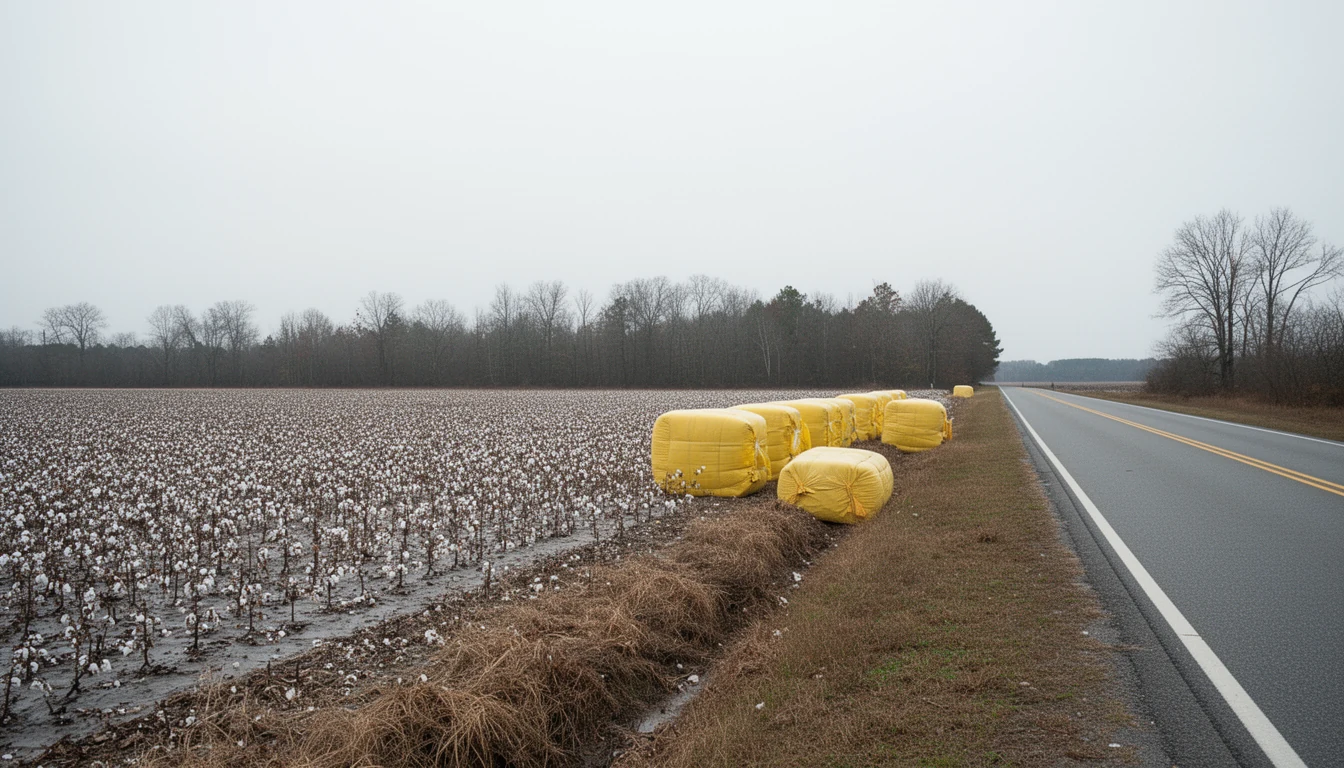
The cotton modules sit at the edge of a field between Spring Hope and Nashville, wrapped in yellow plastic, waiting on a truck. It’s late November. The picker finished weeks ago and the gin is behind, so they sit.
Turn off the highway and the picture changes fast. A sweet potato house runs its fans, flat and steady, pushing air through bins stacked high inside. The smell is dry dirt with something faintly sweet under it. That is the county’s biggest crop curing down for winter.
If you’re buying a house with acreage or a piece of open land in Nash County, this economy is not scenery. It sets your tax bill and your zoning, and it decides how early the trucks run and what the ground is worth per acre. Here is how the pieces fit.
What this county actually grows
The 2017 Census of Agriculture county profile counted 425 farms on 129,478 acres here, an average of 305 acres each, selling $191.7 million in products. That’s close to 37 percent of the county’s land base in farms.
The crop acres from that count:
- Soybeans: 34,328 acres
- Vegetables harvested, all: 18,543 acres
- Sweet potatoes: 15,504 acres
- Tobacco: 9,493 acres
- Cotton: 6,816 acres
Livestock is not a side note. The same count found 54,804 hogs and 1.2 million broilers in the county.
Statewide, the 2022 Census put North Carolina at 42,814 farms on 8.1 million acres, selling $18.7 billion, eighth in the country.
Why the sweet potato houses are in Nashville
North Carolina has ranked first in sweet potatoes since 1971 and grows close to 60 percent of the national supply. Four counties provide about half of that: Sampson, Johnston, Wilson, and Nash.
Nash grew 187 million pounds in 2020, second in the state behind Sampson’s 259 million. The state’s crop was worth about $254.5 million in 2024 on 86,500 harvested acres.
What makes Nashville the center of it is not just soil. It’s storage. Sweet potatoes come out of the ground in late summer and fall, get cured in a warm humid room, then hold in climate-controlled storage for months. An operation with enough storage sells into spring and summer, long after the field is bare.
Nash Produce sits on the north side of Nashville. A group of tobacco and sweet potato farmers formed the company in 2006, and it has since dropped pickling cucumbers to pack sweet potatoes only. Covington, Bonita, and Murasaki are the varieties it runs.
For a buyer, that has a practical meaning. The fields around Nashville are not speculative ground waiting on a subdivision. They are contracted acres feeding a packing house that needs them every year.
The tobacco barns are the history lesson
Tobacco still pays. Nash sold $44.8 million of it in 2017, third among North Carolina counties.
The shape of the business changed in 2004. The Fair and Equitable Tobacco Reform Act, signed that October, ended the federal quota system with the 2005 crop and paid quota holders and growers in ten annual installments through 2014. Before that law, a quota was an asset you could borrow against. After it, buyers set the price and contracts ran longer and thinner.
You can still see the old system standing in the fields. Flue-cured barns with rusted metal siding and stick-built scaffolds inside. Packhouses with wide doors. Small tenant houses at the end of gravel drives, some rented, some empty.
The buyer’s problem with those buildings is money. They cost more to insure than they return, and they are hard to repurpose. A barn that cured leaf does not become a shop without a new roof and new wiring, plus a county permit. Find out what the structure is used for now, and get that answer in writing before you fall for the look of it.
What land costs, and what the number means
USDA does not publish a farm real estate average for Nash County, so the benchmark you will hear quoted is the state figure. North Carolina farm real estate averaged $5,750 an acre in 2026, up 5.1 percent from $5,470 the year before. U.S. cropland averaged $6,020.
Locally the spread is wider than any average. Irrigated row crop ground on a good road trades at one number. Cutover and wet spots trade far below it, and so does anything landlocked behind somebody else’s field. A 12-acre parcel with a septic permit and road frontage is priced as a homesite, not as farmland, and it will not sell at the per-acre farm rate.
The pressure on all of it is real. American Farmland Trust projects North Carolina will lose about 1.197 million acres of farmland by 2040, close to 20 percent of the state’s agricultural land. Between 2001 and 2016 the state converted roughly 750,000 acres, and just under 80 percent of that went to low-density residential use. That is the same pattern as a ten-acre tract off a county road with one house in the middle of it.
The tax bill that follows the land
Most working land here is enrolled in present use value, the state program that taxes land on what it produces instead of what it would bring on the open market. The rules are specific.
Agricultural land needs at least 10 acres in actual production and an average gross income of $1,000 a year over the three years before January 1. Horticultural land needs 5 acres. Forestland needs 20. Houses, barns, and other improvements on the land are still appraised at market value.
The catch is the rollback. When land leaves the program (a sale to someone who will not farm it, a homesite split off, production ending), the current year is billed at market value and the deferred taxes from the three fiscal years before it come due with interest. G.S. 105-277.4 spells that out.
For a buyer, that means two numbers, not one. The asking price, and the tax bill that arrives after closing. A tract that has been in the program for decades can carry a rollback larger than a first-year buyer expects. Ask the Nash County Tax Administration office for the deferred tax amount on the exact parcel before you make an offer. Then ask whether the acreage you plan to keep farming still meets the income test on its own.
One more piece of the machinery is worth knowing. County zoning in North Carolina cannot regulate property used for bona fide farm purposes under G.S. 160D-903. That is why a farm building can go up next to a subdivision without a zoning review. It also means the county cannot shield you from a farm use that was there first.
What a working neighbor means day to day
I have walked fields in this county in May, when the wind carries a sprayer’s mist across the ditch line, and in October, when a cotton picker takes both lanes of a two-lane road at fifteen miles an hour with a line of cars behind it. Nobody is doing anything wrong. It is the job.
Dust off a disk in dry weather settles on everything. Deer come out of the field edges at dusk and eat gardens. Module trucks run early. If a sweet potato house sits within a few hundred feet, you will hear the fans, and in curing season they do not stop.
The other side of it is the reason a lot of people move out this way. The field across the road will not be a subdivision next year as long as it is in production. Open ground stays open when the farming works.
Nash County has two tools aimed at that. The county adopted its voluntary agricultural district ordinance in August 2009, effective January 1, 2010, and amended it in 2022. The Nash Soil and Water Conservation District administers it, and the county offers an enhanced district for landowners who want more. Separately, the county created a farmland preservation program funded by rollback taxes that pays part of the cost of permanent agricultural easements.
Be clear about what each one does. A voluntary agricultural district is notice and a promise of good faith, not a permanent restriction on the next owner. An enhanced district or a donated easement is how a view gets locked down for good. If the open field next door is the reason you are buying, ask whether it sits in either one.
What I would check before writing an offer
Call the tax office and ask for the present use value status and the rollback estimate on the parcel number. Ask for acres in production, separately from acres in the deed.
Ask the planning department whether the tract can be split, and how many homesites the soil will carry. A percolation test and a septic permit answer more than a seller’s word does.
Check whether the neighboring farmland is enrolled in a district or an easement, and get that answer from the county rather than the listing agent.
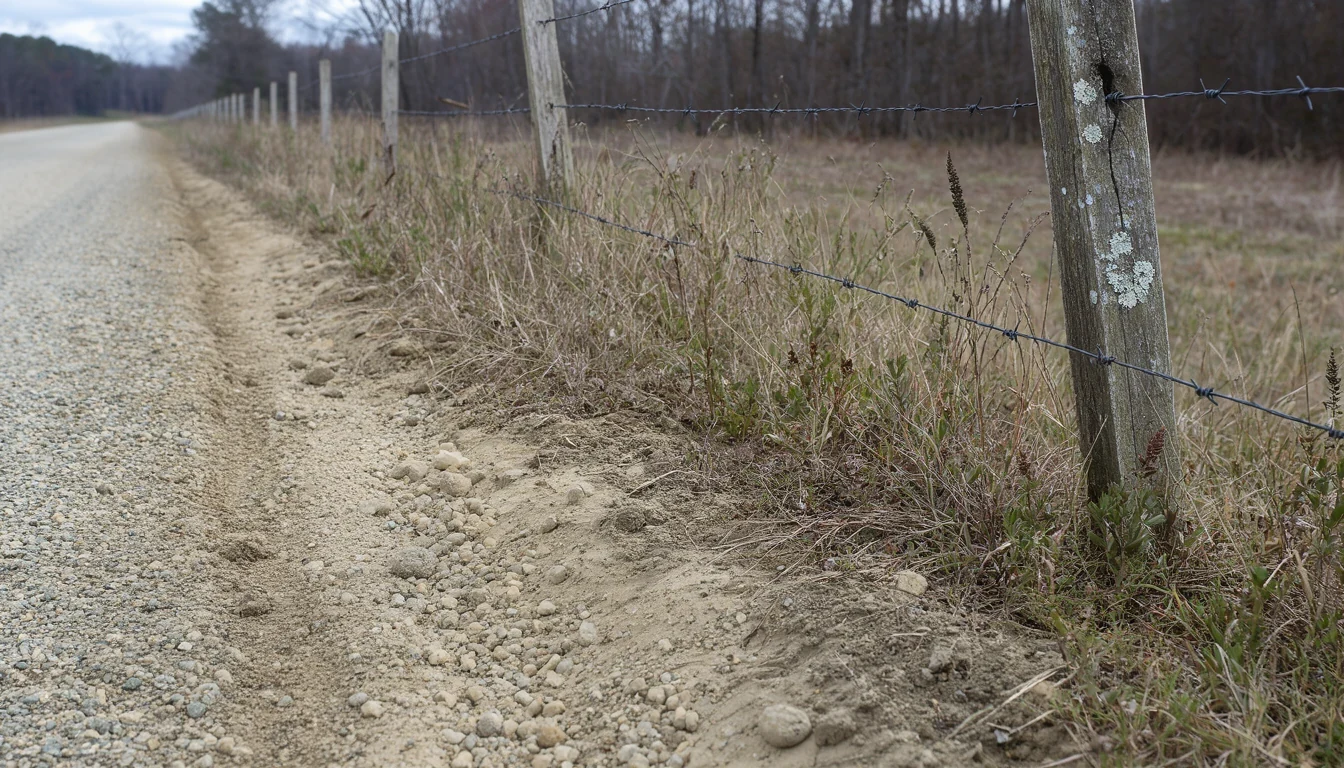
Walk the property line in person. Fence lines move over forty years, and the line on the tax map is not always the line in the brush.
Read the flood map. Low ground along the Tar River and its creeks floods, and farm lanes cross it.
The county will keep growing sweet potatoes and it will keep growing houses. The question is which field gets which. Ask the questions above and you will know what you are buying before you sign.
Keep reading
7 Costs Beyond the Down Payment in Nash County
The due diligence fee, inspection bills, survey, title work, and prepaids: what actually lands on a Nash County closing statement beyond the down payment.
Where Nash County Buyers Land, Town by Town
Rocky Mount's west side, Nashville's square, Spring Hope's depot blocks, and the 1908 towns on US-264: how Nash County's places differ for buyers.
7 Flood-Insurance Mistakes Tar River Buyers Shouldn't Make
Flood insurance on the Tar River: the 30-day wait, the $250,000 cap, contents left off the policy, and a discount Rocky Mount buyers never claim.